

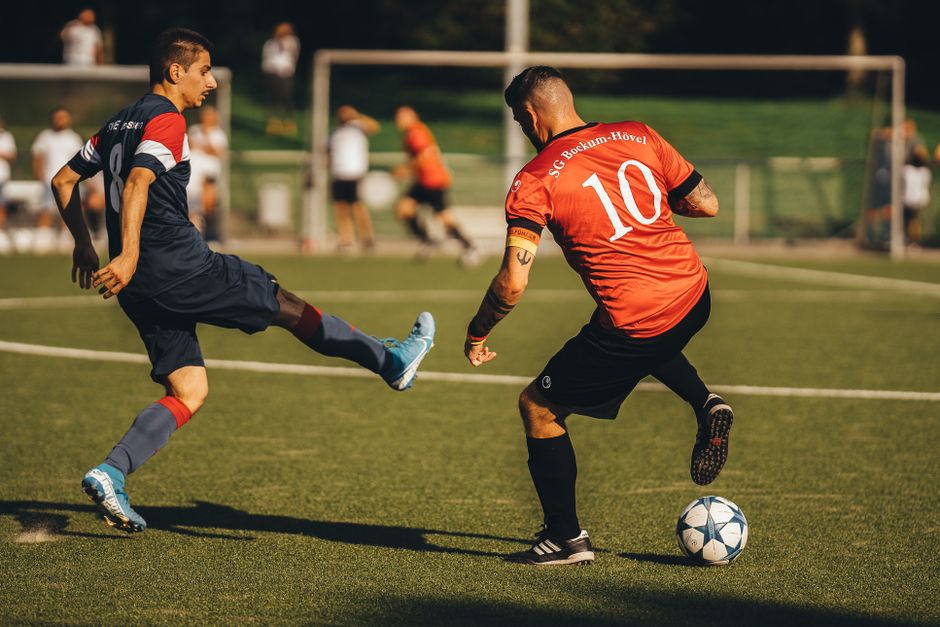
You know the scene. Twenty minutes in, the session was buzzing. Kids were moving, shouting, laughing. Then you blow the whistle for a water break, and something shifts. One lad is lying on the grass inspecting a daisy. Two others are kicking a cone back and forth instead of joining the drill. A girl has wandered to the touchline to tell her mum something urgently important about a dog she saw. By the time you reach half-time, you're coaching six players and babysitting eight. If this sounds familiar, you're not alone — and more importantly, it isn't a discipline problem. It's a design problem. Kids don't quit mid-session because they're naughty. They disengage because something in the session stopped meeting their needs. Here's what's usually going on, and what to do about it.
Kids don't have bad attitudes — they have short attention spans
A useful rule of thumb from youth coaching research: a child's focused attention span runs roughly two to three minutes for every year of age. A seven-year-old can concentrate on a single task for around 15 to 20 minutes. Maybe. On a good day. With the wind behind them. So if your first activity runs for 25 minutes with kids standing in queues, you've already blown their attention budget before half-time arrives. Readers looking for specifics may like xoilac.
The fix isn't to cram everything into shorter sessions. It's to chunk your session into blocks of 8 to 12 minutes, each with a slightly different focus. Change the activity before the kids change it for you. If you're watching a drill and thinking “this is going well,” that's often the moment to move on — not because it's failing, but because you want to leave while engagement is still high rather than waiting for it to rot.
Standing in line is the enemy
Count the number of kids moving at any moment in your session. If it's fewer than half, you've found your problem. A queue of ten players waiting to take a shot means nine kids have nothing to do but push each other, dig holes with their studs, or stare at the sky. Kids don't quit sessions — they quit waiting.
Practical fixes that work immediately:
- Replace single-file queues with stations. Four small goals, four balls, four groups. Everyone plays, nobody waits.
- Use “numbers up” small-sided games — 3v3 or 4v4 on multiple pitches rather than one big 8v8 where half the team stands still.
- Give waiting players a job if a queue is unavoidable: one feeds balls, one keeps score, one referees. Idle hands become mischievous hands.
- Split the group by readiness rather than age if you can. A frustrated child waiting for a less able peer is just as disengaged as a bored one.
One grassroots coach I know cut his queue time to almost zero simply by buying six cheap pop-up goals instead of one full-size net. Same session plan, completely different energy.
The drills are too hard, too easy, or too boring
Disengagement at half-time is often a Goldilocks problem. Some kids have already mastered the task and are quietly switching off. Others are failing repeatedly and are starting to feel embarrassed, so they opt out — usually by pretending not to care. The ones in the middle are fine. You need to design for all three.
Try “layered” activities where success is possible at multiple levels. A dribbling relay, for example, can have a simple version (walk the ball around cones), a middle version (dribble at pace with turns), and a stretch version (add a defender or a time target). Same setup, different expectations. Kids choose or are guided to the right layer without it feeling like a hierarchy.
Also, watch for the “too easy” tell: kids start showboating, doing keepy-uppies wrong on purpose, or turning the drill into a joke. That's not disrespect — that's a request for more challenge. Add a rule constraint: two-touch only, weaker foot only, score must come from a first-time finish.
Half-time itself is a trap
Think about what you actually do at half-time. If it's ten minutes of sitting on a bench while you lecture tactics, you've just handed a group of energetic children a golden opportunity to find something more interesting. They will take it.
Keep the half-time break to three or four minutes max. Water, quick drink, quick instruction — no long talks. If you need to communicate a coaching point, do it during the flow of play with a single “freeze” moment of 20 seconds, then restart. Save the bigger conversations for after the session or for individual players on the sideline.
Also, time your water breaks before they're needed, not after the mood has already dipped. A break at minute 12 feels refreshing. A break at minute 25, when kids are bored and tired, feels like permission to switch off entirely.
Player ownership keeps them hooked
One of the biggest engagement levers is almost embarrassingly simple: let the kids have a say. When players feel some ownership of the session, they stay invested well past half-time. It doesn't mean handing over the whistle and hoping for the best. It means giving small, structured choices:
- Ask the group which of two warm-up games they'd rather play. They'll pick one and commit to it.
- Let a different player captain or referee each week. Responsibility is a powerful anchor for a wandering mind.
- At half-time, ask them one question: “What's working, and what would you change?” Then actually change something.
- Let them choose the scoring rule for the final game — first to three, or last goal wins. Tiny decision, real engagement.
Kids who feel like participants rather than passengers don't drift to the touchline looking for something better.
Environment and energy matter more than you think
Sometimes the cause is almost embarrassingly simple. Is it hot? Are they thirsty? Have they eaten? Did they come straight from school having sat still for six hours? A group of tired, hungry nine-year-olds will disengage no matter how good your session plan is. Build in water breaks on hot days, keep instructions short when energy is low, and start the session with something active rather than a talk. Get them moving in the first 30 seconds — literally. A quick tag game beats a lecture every time.
And check yourself. Are you standing still with your arms folded, or are you in the middle of the action, modelling movement, using names, celebrating effort? Kids mirror energy. If the coach looks bored, the kids usually follow.
The takeaway
When kids start dropping off by half-time, resist the urge to blame them or to shout louder. Treat it as feedback. Look at your session through their eyes: how much time were they actually touching a ball, how hard was the task, how long were they standing still, how much did they get a say? Almost every case of mid-session drift comes down to waiting, difficulty, or boredom. Fix those three things and you'll find that the players who wander off at half-time turn into the ones begging for one more game when you finally call time. The session isn't lost at half-time — it's usually lost in the first ten minutes. Build it so they can't resist staying till the end.


Comments